
One of my favorite things to do is curl up with a good book. I’ve always loved to read. I belong to two neighborhood book clubs, which are composed of all women. Because of that, I’ve read a lot of books over the past few years that tell the stories of women from different cultures and backgrounds. Novels with strong female protagonists are quite popular.
It is a historical fact that women have not always been valued for their contributions to society. Western civilization has come a long way in making positive changes, but in many cultures, women are still seen as “less than” the male species. That’s why the teachings of Christianity were so radical. Jesus elevated women, treating them with respect and honoring them—something which was contrary to the norm in His day.
Genesis 16 tells the story of one woman whose life was turned upside down by those who held power over her: the story of Hagar. In those days, it was common for a man to have multiple wives. And if his first wife could not bear children, she could offer her maidservant as a surrogate to bear a child on her behalf. This is exactly what happened to Hagar.
God had promised Abram he would bear a son, and many nations would come from his flesh. Up to this point, however, no mention had been made of Sarai, so at Sarai’s request, he takes Hagar and impregnates her. As soon as she becomes pregnant, Hagar despises her mistress; Sarai responds harshly, causing Hagar to run away.
Hagar’s story takes an unusual turn here. God, in the form of an angel, appears to her in the desert, to which she has fled, and asks her two pointed questions.
“Where have you come from?”
“Where are you going?”
Hagar confesses that she is running away from her mistress, perhaps thinking this angel will rescue her and take her away from her misery. Instead, God says, “Go back to your mistress and submit to her.” He then promises to make a great nation from her son, who will be named Ishmael. Hagar responds with amazing spiritual insight, saying, “You are a God who sees me.” She asks, “Have I even seen Him here and lived after He saw me?”
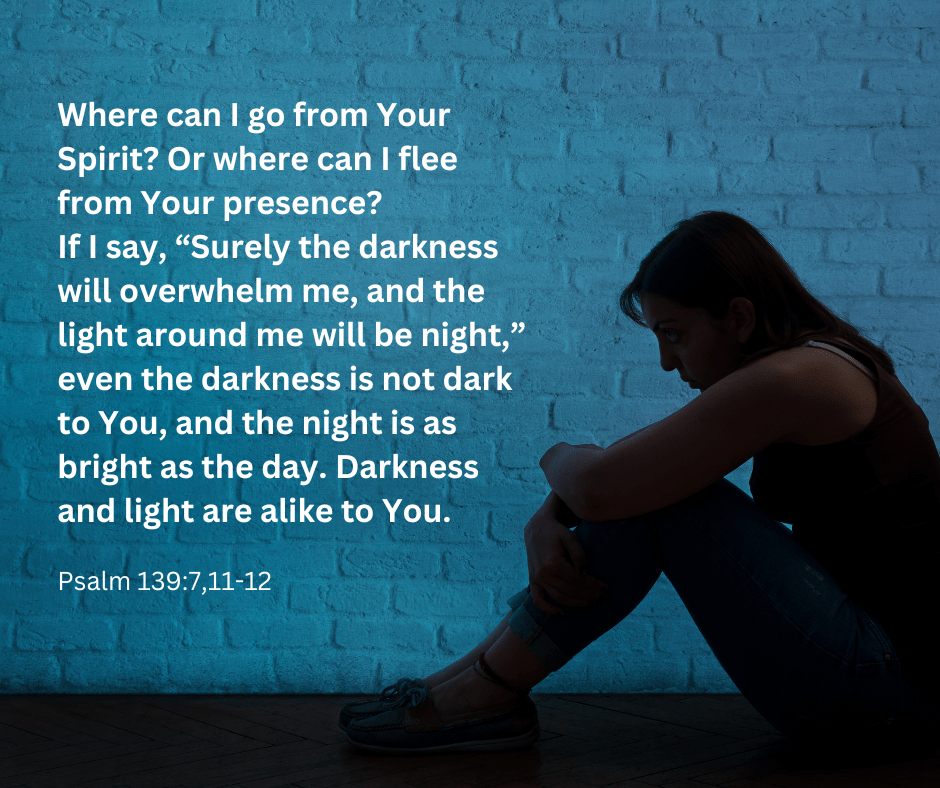
Hagar calls the name of the Lord “El Roi,” meaning the God who sees. The amplified version says: the God who sees me with understanding and compassion.
God saw Hagar’s unfair circumstances.
God saw Hagar’s hurting heart.
God saw Hagar’s hopelessness.
God saw Hagar’s desperation to escape.
God saw Hagar’s anger.
This is the story of a young woman who was treated badly by those who should have known better. After all, Abram was God’s chosen—a man of great faith—one who was called the friend of God! In my opinion, God should have rescued Hagar and allowed her to leave. Instead, God sends her back into the hard circumstances, but with a promise that something good will come of it. He changes her perspective but not her circumstances.
Hagar returned to Sarai and submitted to her in obedience to God. Ishmael would be a teenager before she found herself again in the desert (Genesis 21). Only this time, she was not running away but was being sent away. And just as before, God would see her and meet her at her point of need.
Hagar’s story isn’t a fairy tale; it’s a reality check. Sometimes, God allows hard things to happen—things we’d rather not experience and from which we’d like to escape. When the difficult days come, however, Hagar reminds us of what to do.
Cry out to El Roi.
Take note of where you have come from.
Set your eyes on where you are going.
Trust the God who sees you, even when you’d rather run away.
Romans 8:28 – And we know that God causes all things to work together for good to those who love God, to those who are called according to His purpose.
 The Way Of The Word