
Psalm 1
1How blessed is the man who does not walk in the counsel of the wicked,
Nor stand in the path of sinners,
Nor sit in the seat of scoffers!
2 But his delight is in the law of the Lord,
And in His law he meditates day and night.
3 He will be like a tree firmly planted by streams of water,
Which yields its fruit in its season
And its leaf does not wither;
And in whatever he does, he prospers.
4 The wicked are not so,
But they are like chaff which the wind drives away.
5 Therefore the wicked will not stand in the judgment,
Nor sinners in the assembly of the righteous.
6 For the Lord knows the way of the righteous,
But the way of the wicked will perish.
This is a favorite psalm of many. I distinctly remember it being on our list of “scriptures to memorize” during our annual Vacation Bible School, and its words are still as encouraging, yet convicting, today as they were to me more than fifty years ago.
We all love the first three verses—promises from God to those who love His Word. Yet the last three verses connect directly to our New Testament understanding of the gospel of Jesus Christ. Let’s do a little digging!
The KJV translates “wicked” as “ungodly.” It is the Hebrew word rāšāʿ, meaning wicked or criminal. It’s used in the Bible to mean (1) guilty of crime, (2) hostile to God, or (3) guilty of sin against God or man. Strong’s defines it as “morally wrong,” and the word is used 263 times in the Old Testament.
Psalm 1 contrasts the righteous and the wicked. (The righteous man is depicted in the first three verses.) Righteousness is the opposite of wickedness, but no one is righteous by his own merit. For all have sinned and fall short of the glory of God (Romans 3:23). There is none righteous, no, not one (Romans 3:10; Psalm 14:1-3).
What do we learn about the righteous by comparing him to the ungodly?
A righteous man is one who is no longer guilty of crime.
To commit a crime is to break a law. Whose law? God’s. We are all criminals, having broken at least (some) of God’s commands, yet guilty of all (James 2:10). There is only one Person who is truly not guilty—Jesus Christ, God’s Son. He took our guilt; He paid for our crime, and we received His spotless record—pardoned, forgiven, and made righteous.
2 Corinthians 5:21 – He made Him who knew no sin to be sin on our behalf, so that we might become the righteousness of God in Him.
Hebrews 4:15 – For we do not have a high priest who cannot sympathize with our weaknesses, but One who has been tempted in all things as we are, yet without sin.
Colossians 2:13-14 – When you were dead in your transgressions and the uncircumcision of your flesh, He made you alive together with Him, having forgiven us all our transgressions, having canceled out the certificate of debt consisting of decrees against us, which was hostile to us; and He has taken it out of the way, having nailed it to the cross.
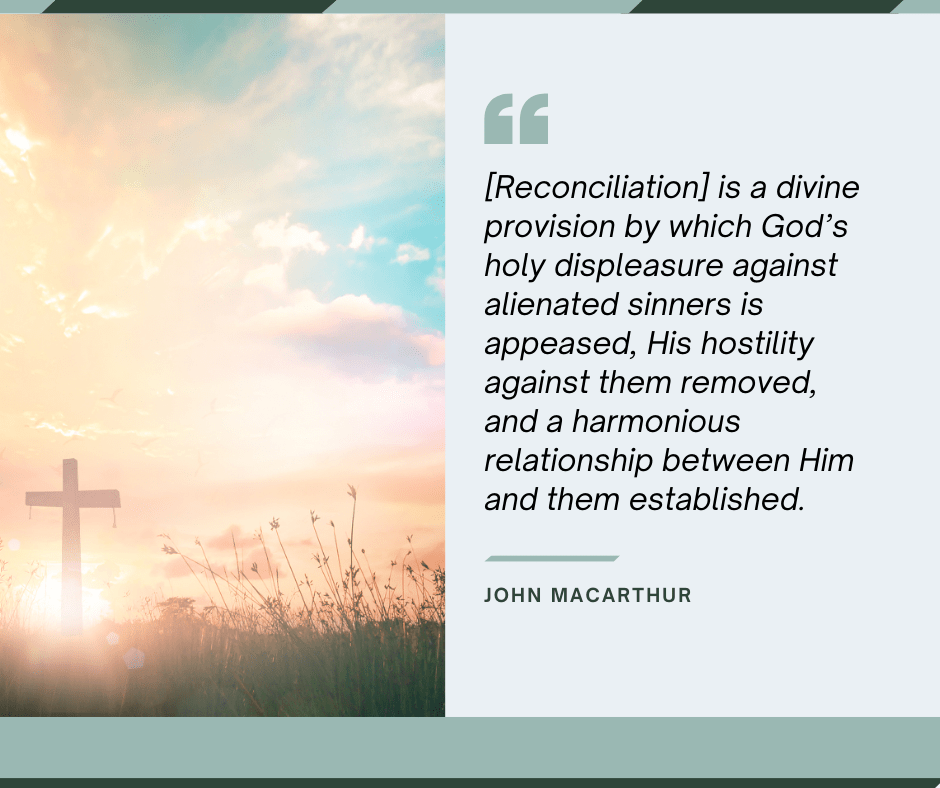
A righteous man is one who is no longer hostile to God.
The ungodly are enemies of the cross by virtue of their actions and nature (Philippians 3:18). They live as friends of the world, making themselves enemies of God through their willful actions. They are of the flesh, not the Spirit. When God reconciles us through His Son, we cease to be hostile toward Him; we are no longer His enemy—but His friend (John 15:15).
Romans 8:7-8 – Because the mind set on the flesh is hostile toward God; for it does not subject itself to the law of God, for it is not even able to do so, and those who are in the flesh cannot please God.
Romans 5:9-11 – Much more then, having now been justified by His blood, we shall be saved from the wrath of God through Him. For if while we were enemies we were reconciled to God through the death of His Son, much more, having been reconciled, we shall be saved by His life. 11 And not only this, but we also exult in God through our Lord Jesus Christ, through whom we have now received the reconciliation.
Ephesians 2:14-16 – For He Himself is our peace, who made both groups into one and broke down the barrier of the dividing wall, by abolishing in His flesh the enmity, which is the Law of commandments contained in ordinances, so that in Himself He might make the two into one new man, thus establishing peace, and might reconcile them both in one body to God through the cross, by it having put to death the enmity.
A righteous man is one who is no longer guilty of sin.
In Christ, God pardons the guilty criminal and, through His indwelling Spirit, makes him holy, relieving him of the guilt of his sin. Let’s reason through this. When a man commits a crime (breaks the law), he must suffer the penalty. Whatever the judge decrees, according to the law, is the correct and lawful consequence. This is what Jesus’ death did for us. The wages of sin is death (Romans 6:23).
However, there is also the weight of sin upon a man’s soul and spirit. A murderer may serve his sentence in prison, satisfying the law, but that sentence will not remove the guilt he carries in his soul. This is what the Holy Spirit does in us—He cleanses our conscience and makes us holy, freeing us from the guilt of our sin. This is both a once-for-all cleansing—we are positionally made holy, seated in the heavenlies with Christ (Ephesians 2:6; Colossians 3:1-3)—and an ongoing cleansing if (when) we sin after salvation.
Hebrews 9:13-14 – For if the blood of goats and bulls and the ashes of a heifer sprinkling those who have been defiled sanctify for the cleansing of the flesh, how much more will the blood of Christ, who through the eternal Spirit offered Himself without blemish to God, cleanse your conscience from dead works to serve the living God?
1 John 1:7-9 – But if we walk in the Light as He Himself is in the Light, we have fellowship with one another, and the blood of Jesus His Son cleanses us from all sin. If we say that we have no sin, we are deceiving ourselves and the truth is not in us. If we confess our sins, He is faithful and righteous to forgive us our sins and to cleanse us from all unrighteousness.
Ephesians 5:25-27 – Husbands, love your wives, just as Christ also loved the church and gave Himself up for her, so that He might sanctify her, having cleansed her by the washing of water with the word, that He might present to Himself the church in all her glory, having no spot or wrinkle or any such thing; but that she would be holy and blameless.
What happens to the ungodly?
He will not endure; he is like chaff driven by the wind. He will not stand at the judgment; he will be found guilty and sentenced. He will not be welcomed among the righteous congregation; he is an enemy of God and of God’s people. He will perish (be destroyed, vanish, be put to death); the soul who sins will die (Ezekiel 18:4).
Oh, what a sad ending, especially given all that God offers to those He makes righteous. God’s people will be firmly planted, fruitful, and spiritually prosperous.
I’m so thankful that Christ has pardoned my crimes against God’s law and reconciled me to the Father. He has made me holy and has cleansed my conscience so that I can live in the joy of that holiness. Truly, as the psalmist says, I am blessed!
 The Way Of The Word